Smart Water R&D and Innovation
Connecting research with the realities of water management
Field experience helps identify what a treatment plant or water network needs, which data are available and how to verify whether an innovation improves performance. Smart Water Institute brings this perspective to research and development projects with universities, research centres and water utilities.
Based in Spain, we seek to collaborate with international teams that combine scientific knowledge, technological development and validation in real operating environments. We start with specific needs to define feasible projects with clear responsibilities and measurable results.
Complementary capabilities
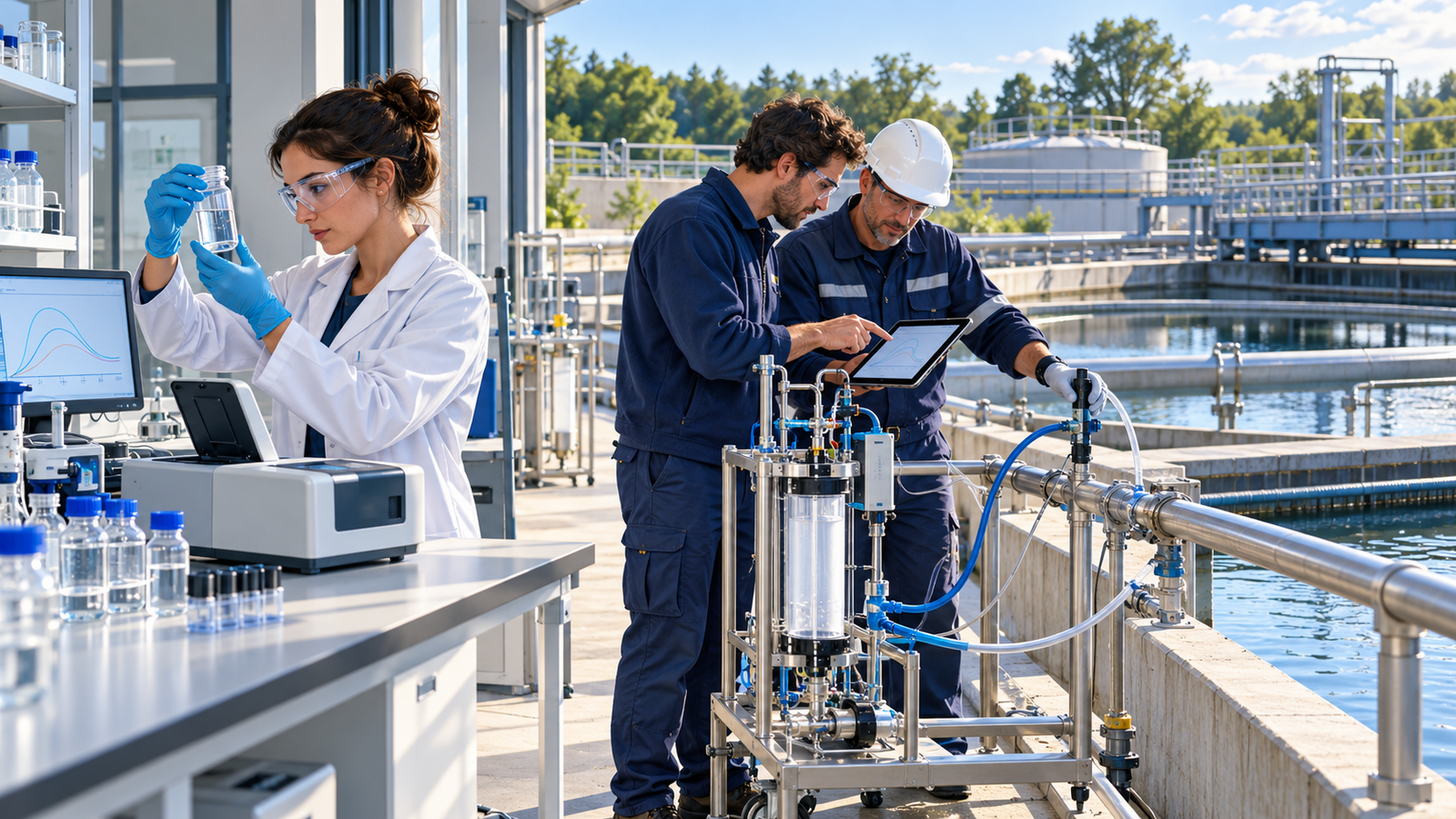
Field experience, research and operations
Collaboration is organised around each participant’s capabilities and commitments. From the outset, the technical proposal defines who conducts the research, develops the solution, integrates it and validates its performance.
Smart Water Institute
Contributes experience in water system management, operations, maintenance and automation to turn an operational need into an engineering and research project.
- Technical site visits, assessment and identification of opportunities.
- Requirements for processes, instrumentation, data and integration with existing systems.
- Technical coordination, support during trials and evaluation of results with the operator.
Universities and research centres
Provide the scientific and development capabilities needed to investigate a solution and assess its limitations.
- Research methodology and experimental design.
- Models, algorithms and software development.
- Assessment of performance, uncertainty and reproducibility.
Water utilities
Provide the operating environment in which the need is identified and the practical value of the solution is verified.
- Facilities, historical records and authorised data.
- Operations and maintenance staff and acceptance criteria.
- Authorisation and supervision of trials, evaluation and adoption of results.
Technology partners
Join when a project requires specific instrumentation, software or integration capabilities.
- Sensors, equipment and platforms compatible with the treatment plant or network.
- Integration, communications and cybersecurity.
- Support and knowledge transfer within the agreed scope.
Applied research areas
Innovation that addresses real needs
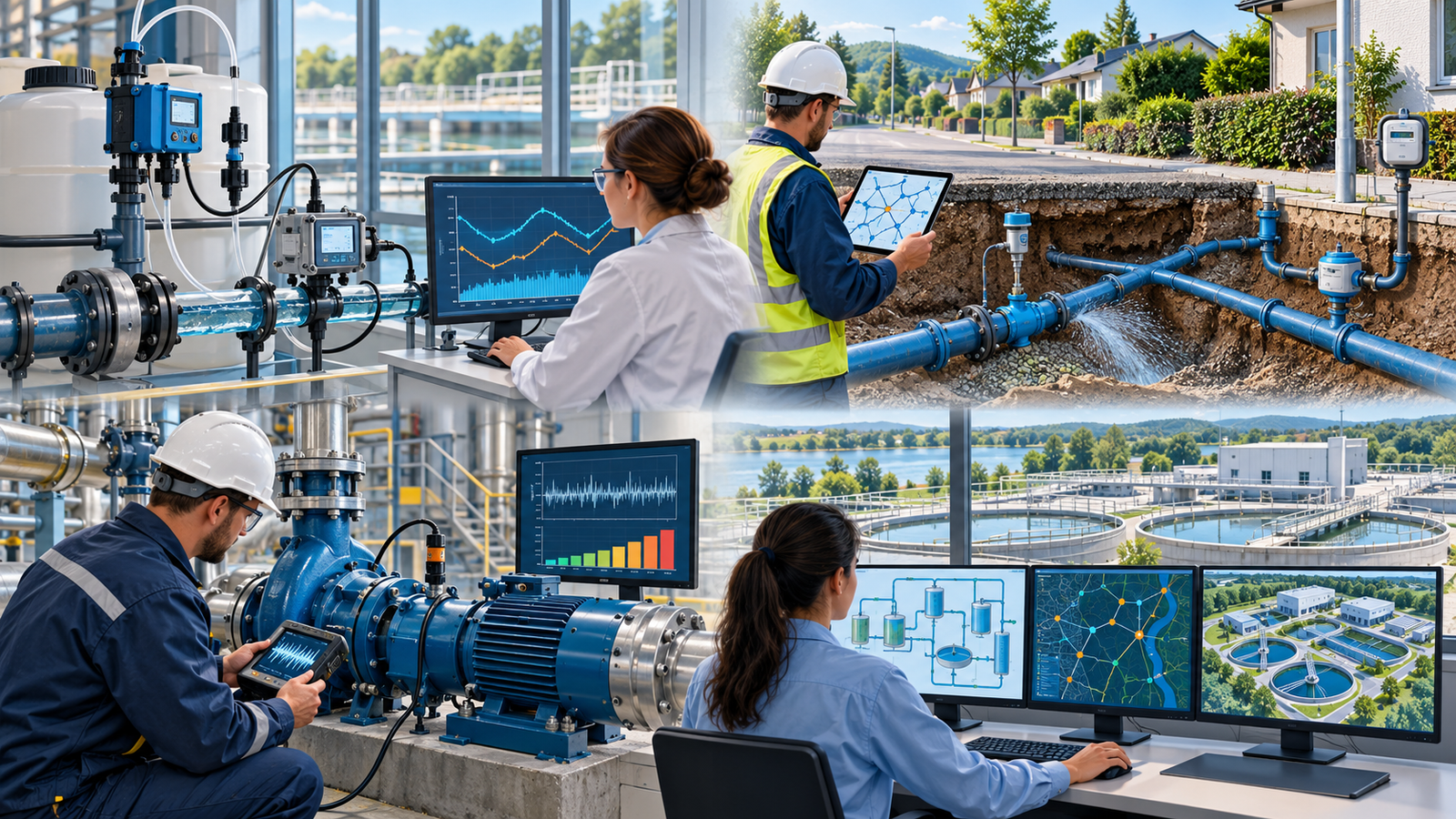
These research areas represent opportunities for collaboration. The scope, technological maturity and objectives of each project will be defined after assessing the facility and the available data.
AI-driven dynamic setpoints
Investigate how to adapt chemical dosing to water conditions using historical data and current measurements. The first proposed application is chlorination: comparing static and dynamic setpoints under supervision, with disinfection and water quality as the priorities.
Networks and water loss detection
Combine flow, pressure, district metering, smart metering and customer billing data to investigate anomalies, locate losses and support the reduction of non-revenue water.
Maintenance and efficiency
Use operating and maintenance data to investigate early fault detection and improve equipment availability. Assess energy efficiency opportunities according to the process and the information available.
Data and digital twins
Integrate information from SCADA, GIS, metering and asset management with models for exploring scenarios and supporting decisions. Each application requires a reliable data foundation and specific validation.
From concept to evidence
A pilot must demonstrate its practical value
Before developing a solution, we agree with the participants on the operational problem, the baseline, the required variables and the outcomes to be measured. The availability of data, instrumentation, resources and permissions determines the feasible scope.
The university or research centre develops and evaluates the models. Smart Water Institute contributes field requirements and supports integration. The water utility authorises and supervises the trials.
Results are compared with baseline operations before deciding whether to adopt the solution for routine use or expand its application.
Project preparation
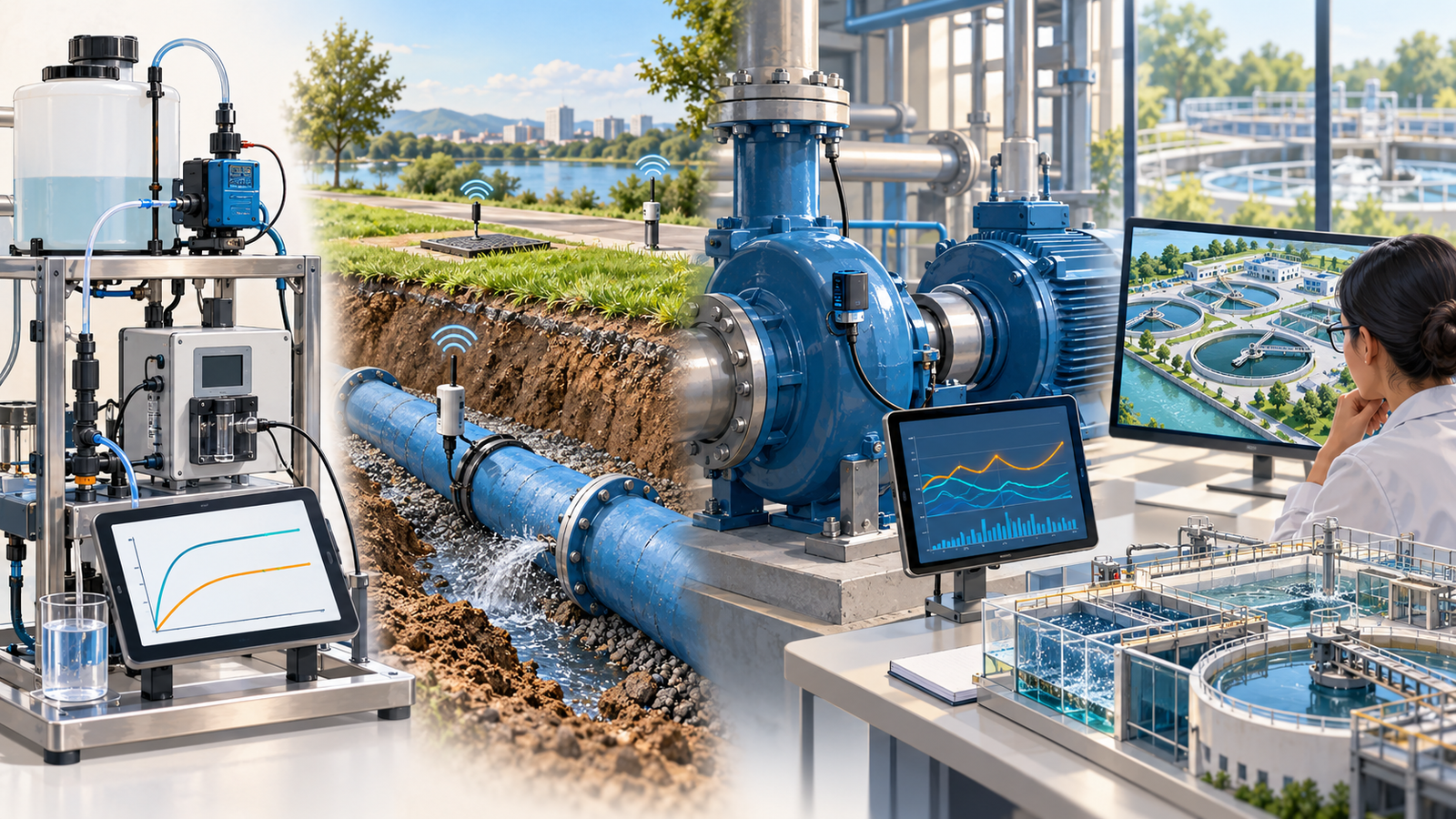
From a specific need to a joint proposal
Identify the opportunity
Review the facility with the operator, identify needs and select an opportunity with practical value and a clear research component.
Define the team and scope
Assign responsibilities, review capabilities and agree on objectives, data access, expected outcomes and evaluation criteria.
Plan development and the pilot
Define activities, deliverables, schedules, budgets and resources. Agree on trial conditions, integration and monitoring with plant personnel.
Prepare implementation and transfer
Agree on funding, confidentiality, intellectual property, data use and support responsibilities. Prepare training and potential replication at other facilities.